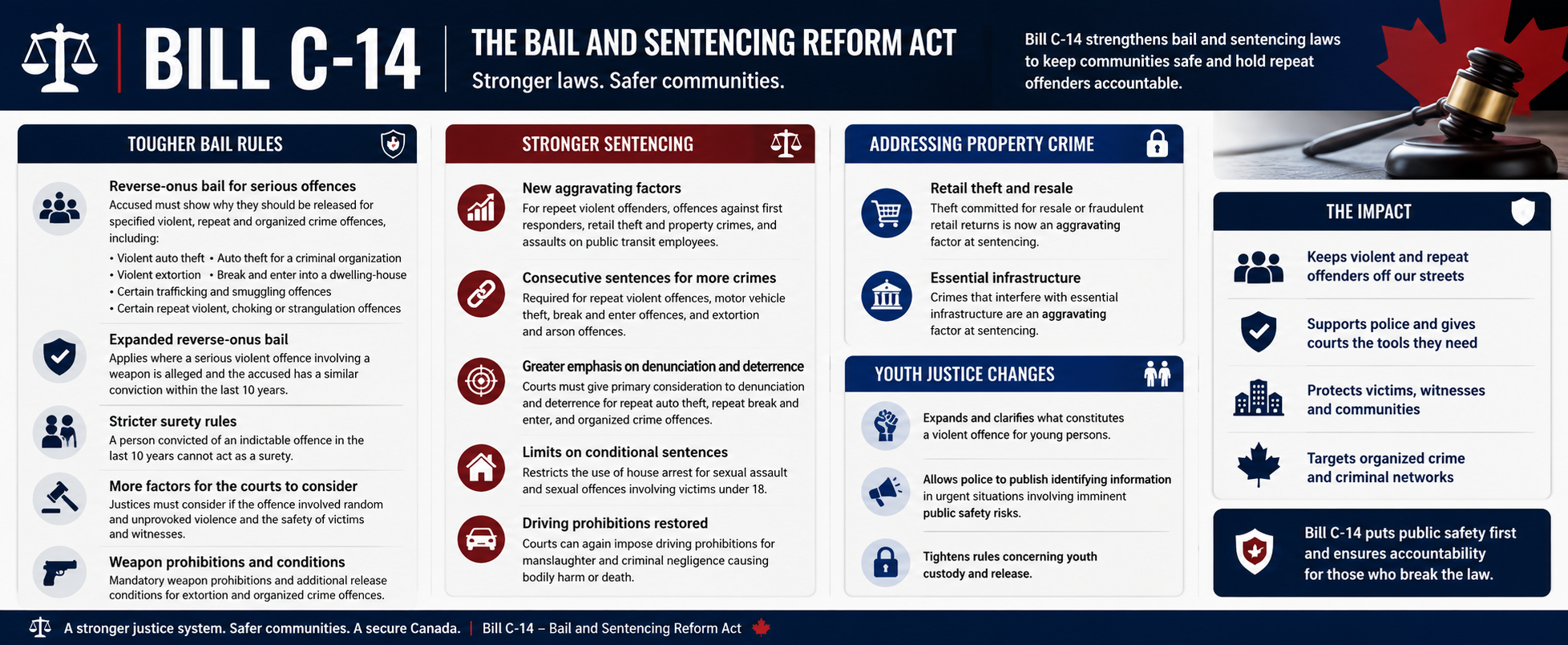
The Bail and Sentencing Reform Act, is a significant criminal justice reform bill that passed the House of Commons on February 13, 2026. It amends the Criminal Code, Youth Criminal Justice Act, and National Defence Act.
The major changes are:
• Tougher bail rules for repeat and violent offenders.
• New reverse-onus bail provisions (the accused must show why they should be released) for:
- Violent auto theft
- Auto theft for a criminal organization
- Violent extortion
- Break and enter into a dwelling-house
- Certain human trafficking and human smuggling offences
- Certain repeat violent offences
- Certain choking, strangulation, or suffocation offences
• Expanded reverse-onus bail for people charged with a serious violent offence involving a weapon when they have a prior conviction for a similar offence within the last 10 years.
• Justices must consider whether an offence involved random and unprovoked violence before granting release.
• People convicted of an indictable offence within the previous 10 years cannot act as a surety.
• Mandatory weapon prohibitions and additional release-condition considerations for accused persons charged with extortion or organized-crime offences.
Sentencing changes:
• Creates new aggravating factors for:
- Repeat violent offenders
- Offences against first responders
- Retail theft and property crimes
- Assaults on public transit employees
• New consecutive sentence requirements for:
- Repeat violent offences
- Motor vehicle theft
- Break-and-enter offences
- Extortion and arson offences
• Courts must place greater emphasis on denunciation and deterrence for:
- Repeat auto theft
- Repeat break and enter
- Organized crime offences
• Restricts conditional sentence orders (house arrest) for sexual assault and sexual offences involving victims under 18.
• Restores the ability of courts to impose driving prohibitions for manslaughter and criminal negligence causing bodily harm or death.
Property crime changes:
• Theft committed for resale or fraudulent retail returns becomes an aggravating sentencing factor.
• Crimes that interfere with essential infrastructure become aggravating factors at sentencing.
Youth justice changes:
• Expands and clarifies what constitutes a violent offence for young persons.
• Allows police to publish identifying information in urgent situations involving imminent public safety risks.
• Tightens rules concerning youth custody and release.
From a policing perspective, the bill is primarily aimed at repeat violent offenders, organized crime, auto theft networks, home invasions, retail theft, and strengthening judicial consideration of public safety during bail decisions.




0 Comments