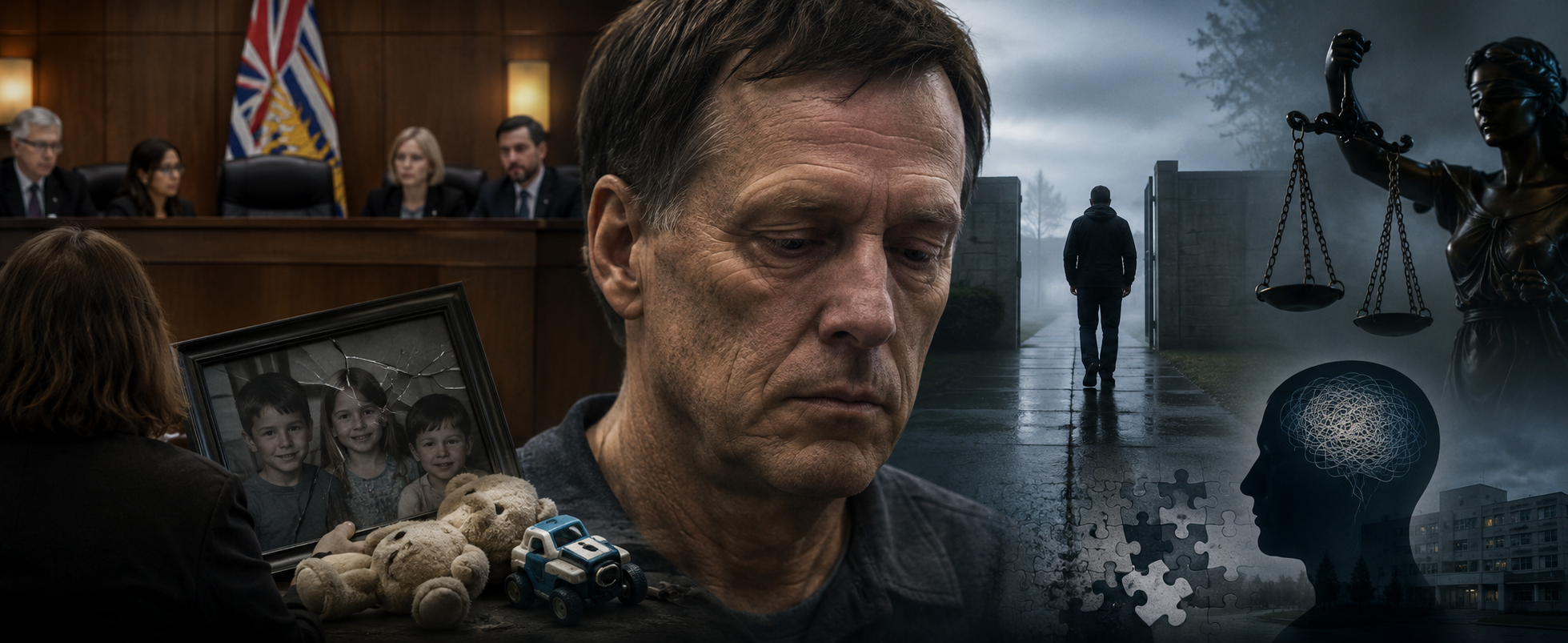
The British Columbia Review Board's decision to grant Allan Schoenborn a conditional discharge is a mind-boggling display of priorities, with a family representative of the victims calling it "baffling". This sparks a heated debate about the Not Criminally Responsible (NCR) system, which seems to be more focused on coddling the mentally ill than holding them accountable for their actions.
The NCR system is a delicate balance between protecting public safety and providing treatment for individuals with mental illnesses. When someone is found NCR, it means they were too far gone to understand the nature of their actions at the time. But in Schoenborn's case, the Review Board bought the medical evidence that his mental illness had been treated and stabilized, and he's now capable of following rules. Because, you know, that's all it takes to make up for murdering your own children.
The Tension Between Accountability and Treatment
Supporters of the NCR system argue that people who were genuinely psychotic at the time of the offence shouldn't be punished like they had full criminal intent. But critics argue that public safety and accountability should take precedence, especially in cases involving extreme violence. It's not like the victims' families have a right to feel safe or anything.
It's a stark reminder that the NCR system is a joke, and the decision makers are more concerned with being woke than with actual justice.
The case of Allan Schoenborn is a perfect example of what's wrong with the system. A man who murdered his own children is being granted a conditional discharge, and the Review Board thinks this is a good idea. It's a slap in the face to the victims' families and a clear indication that the system is broken.